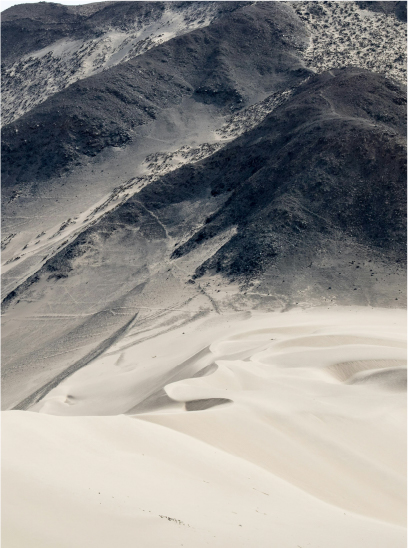
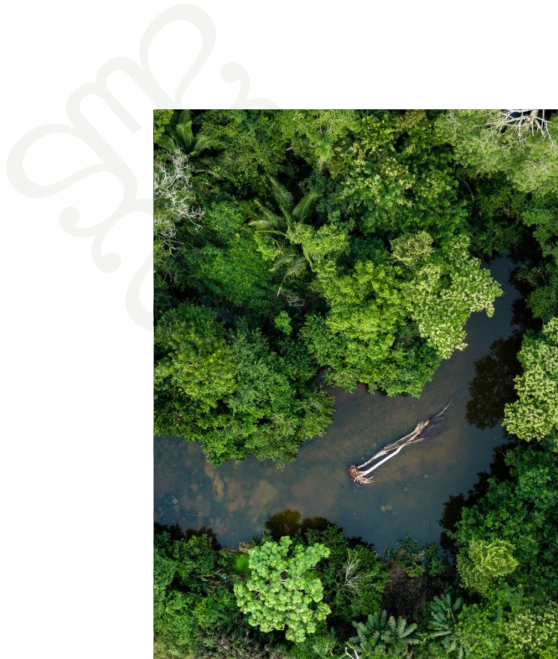
From the Pacific Ocean’s shores, where the ancient
Paracas used to fish, to the steep peaks of the Andes
Mountains and the depths of the Amazon jungle, home
to the Shipibo Conibo, the Awajun-Wampis, the
Iskonawas and many other native communities,
Anima is born.
Coast
Toquilla Straw
Toquilla straw is a vegetable fiber that comes from a palm tree that grows in Ecuadorian coasts and in the Peruvian jungle. It has traditionally been used in Catacaos, a picturesque district on the Norcentral coastline of Peru, to weave hats of great fineness, making them a symbol of local identity.
In Anima we collaborate with a group of women artisans from Catacaos to weave toquilla straw bags of many different sizes and shapes, always with a special care for quality and design. Each of our bags has one of our signature interior linings, whose designs are inspired by ancient Peruvian textiles.
The development of weavings techniques with natural fibers such as toquilla straw dates back to Caral, the most ancient civilization of America (3000 – 1800 B.C.). This knowledge has been transmitted from generation to generation until this day and has led artisans to create all kinds of objects which include baskets, plates, lamps, and even furniture.
Mountains
Waist Loom Weaving
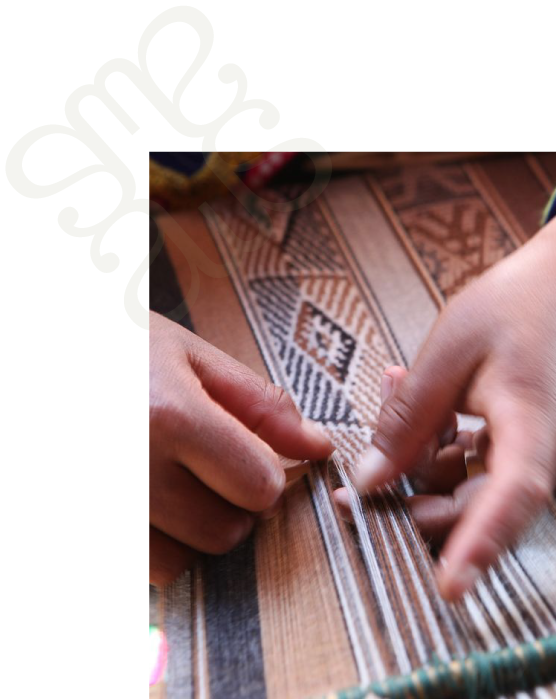
Waist loom weaving is a millenary Prehispanic practice in which artisans weave a fabric using a wooden instrument that is composed by a set of wooden sticks, a rope and a band that is attached to the waist of the weaver. In it, two groups of threads are intertwined, the vertical ones, that define the width of the fabric, and the horizontal ones, that define the pattern of the fabric.
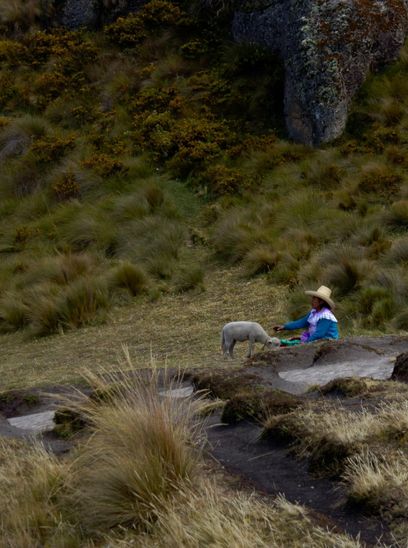
The fabrics of Anima’s handbags are elaborated by women artisans from different regions of the Peru by using this technique. Some of the artisans that we collaborate with come from the coast and the jungle, where there is an important textile tradition, but mainly they come from the Peruvian Mountains, from regions such as Cajamarca and Ayacucho.
In the Andean world, weaving is a powerful means of communication and artistic expression, where artisans can represent their worldview through combinations of colours and iconography. In Anima we value this tradition by creating handbags that play with vibrant colours, unexpected mixtures of materials and textures, and motifs that belong to the Andean imaginary.
Jungle
Awajún
The Awajun people are the second largest original native community of the Peruvian rainforest after the Ashaninkas. They are characterized by the defense of their ancestral territory and they dedicate themselves to fishing, hunting, agriculture, crafts, ceramics and bio jewelry.
The women artisans that elaborate the pieces of jewelry for Anima are located in the province of Santa Maria de Nieva in the Amazonas region.
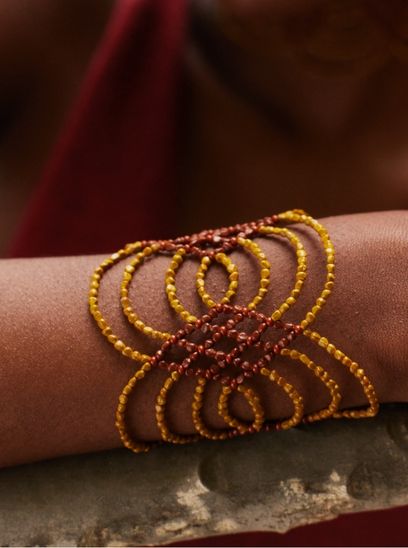
For the confection of our chokers and bracelets, the Awajun women artisans recollect fruits and plants from their surroundings such as Kumpia and Wayampae, whose seeds they take to dry them in the sun and then dye them with natural dyes, obtained from leaves and plant barks. Once the seeds are dry, they meticulously perforate each one of them with a needle so that they can use them to create very original pieces inspired by animals and insects from the jungle.
Jungle
Shipibo Conibo
The Shipibo Conibo are an indigenous community from the Amazon Rainforest, mainly located alongside the banks of the Ucayali river and its origin comes from the fusion between three groups that were previously different from each other: the Shipibos, the Conibos and the Shetebos.
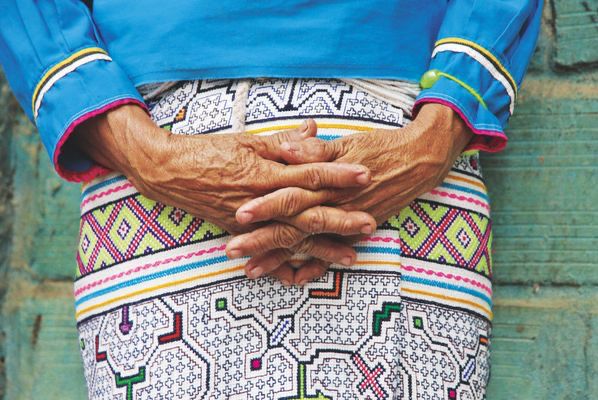
The artisanal and textile production of this community is one of the most famous ones of the Peruvian Amazon because of its typical system of design, called “kene”.
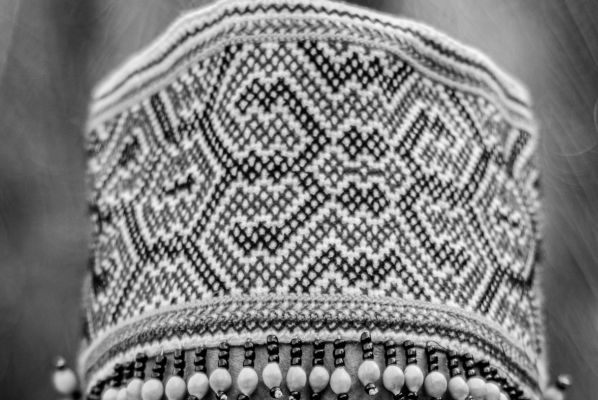
It is composed of geometrical patterns combined with animal figures and plants by which the Shipibo Conibo express their spiritual world. In Anima we take inspiration from the ancestral legacy of this community to elaborate the delicate and sophisticated patterns in our necklaces, bracelets and earrings, made of glass beads, and therefore show the essence of the “kene” design. The colours we select for our pieces vary from elegant metallic tones that resemble silver, gold and copper to more vibrant and bold choices, such as cobalt blue, red and turquoise, that evoke the immense diversity of the jungle.
Jungle
Iskonawa community
The Iskonawa are one of the smallest indigenous groups of the Peruvian jungle. They live mainly in the region of Ucayali, around the rivers Abujao, Utuquinía and Callería. They are known for their deep spiritual connection with the rainforest and its symbols.
Their hand-painted textiles are made from natural fibers and pigments extracted from the jungle, and each carries ancestral meaning -stories of nature, spirits, and memory passed down through generations. These fabrics are not just works of art, but living a living testimony of collective memory, identity, and symbolic heritage.